

• Home
  • Wellness
  • Life&Balance
  • Healthy Planet
  • Life Tips
  • Mind&Body
logo
  • Home
  • Wellness
  • Life&Balance
  • Healthy Planet
  • Life Tips
  • Mind&Body
  • Healthy Planet

Are We Consuming More Than the Earth Can Handle?

2025-12-07 By Charlotte Wilson

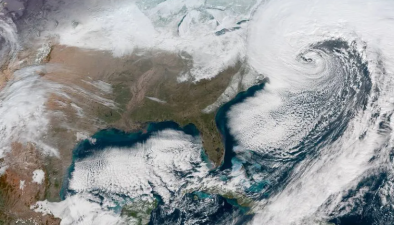
According to the latest Global Environmental Assessment report released by the United Nations Environment Programme, human activities are destroying natural resources at a rate significantly exceeding the Earth's ecosystem's self-repair capacity. This report, compiled over two years and drawing on the findings of hundreds of environmental scientists worldwide, points out that current human destruction of forests, soil, water bodies, and biodiversity has crossed the critical threshold of the Earth's ecosystems. The report emphasizes that this imbalance between destruction and repair capacity is not linear but rather exhibits an accelerating trend of deterioration. If current resource consumption patterns and pollution emission rates continue, global ecosystems will face irreversible degradation risks by 2030. This degradation will not only threaten the basic environmental conditions upon which humanity depends on survival, but will also lead to a series of chain reactions, including food crises, water shortages, and frequent climate disasters.
Impact on Global Development

The report analyzes in depth the potential impact of environmental degradation on the global development pattern. While developed countries currently maintain a high quality of life, this prosperity is built on the excessive consumption of global resources. Research data shows that developed countries, accounting for 20% of the global population, consume more than 80% of natural resources; this development model is clearly unsustainable.
More worryingly, with the continued increase in environmental pressure, the current living standards in developed countries will be difficult to maintain, while the aspirations of developing countries to achieve the same standard of living will face enormous obstacles. The report predicts that without fundamental reforms, by the middle of this century, more than 3 billion people worldwide may face severe resource scarcity.
The constraining effect of environmental degradation on economic development has already begun to emerge. Frequent extreme weather events in recent years have caused trillions of dollars in economic losses globally, with agricultural losses, infrastructure damage, and public health crises becoming increasingly prominent. These losses are offsetting the gains of global economic development, posing unprecedented challenges to efforts to eliminate poverty and improve people's livelihoods.

The Path to Solution

The report calls on the international community to immediately adopt "revolutionary" environmental protection measures. These measures include, but are not limited to: comprehensively reforming existing production and consumption patterns and accelerating the transition to a circular economy; significantly improving resource utilization efficiency and decoupling economic growth from resource consumption by 2050; and establishing a global ecological compensation mechanism to ensure that resource consumers bear their due environmental costs.
At the policy level, the report recommends that governments incorporate environmental indicators into their national economic accounting systems and implement the strictest environmental protection regulations. Simultaneously, it is necessary to strengthen international cooperation and establish globally unified environmental standards and technical specifications. In particular, it is crucial to increase financial and technological support for developing countries to help them achieve green transformation. Technological innovation is considered a key breakthrough in solving the environmental crisis. The report points out that it is imperative to increase R&D investment in clean energy, resource recycling, and ecological restoration. Technological progress should improve resource productivity, develop environmentally friendly products and services, and provide technological support for sustainable development.


The Future of Sustainable Development

To achieve this goal, the design of new cities should emphasize the application of energy-saving and low-carbon concepts from the outset, creating more natural urban ecosystems. Through new urban design and industrial production technologies, the value of ecological products should be increased, achieving sustainable resource allocation. At the same time, industrial production should adopt energy-saving and emission-reduction technologies to enhance the value of ecological products.

Conclusion

The rate of material consumption by human production has far exceeded the Earth's carrying capacity. To protect the Earth's environment and our own health, we need to take corresponding measures to control material consumption and achieve sustainable development. Only in this way can we live healthily and safely in the future.

Recent Posts

Why Protecting Wildlife Protects Us Too

Environmental Protection Is a Global Challenge

Are We Doing Enough to Reduce Plastic Waste?

Why Urban Green Spaces Matter More Than We Think

Protecting the Earth Starts With Understanding It

What Causes Poor Air Quality?

  • About Us
  • Privacy Policy
  • Terms of Use

©Copyright 2025 Wisdom Live. All Rights Reserved.